

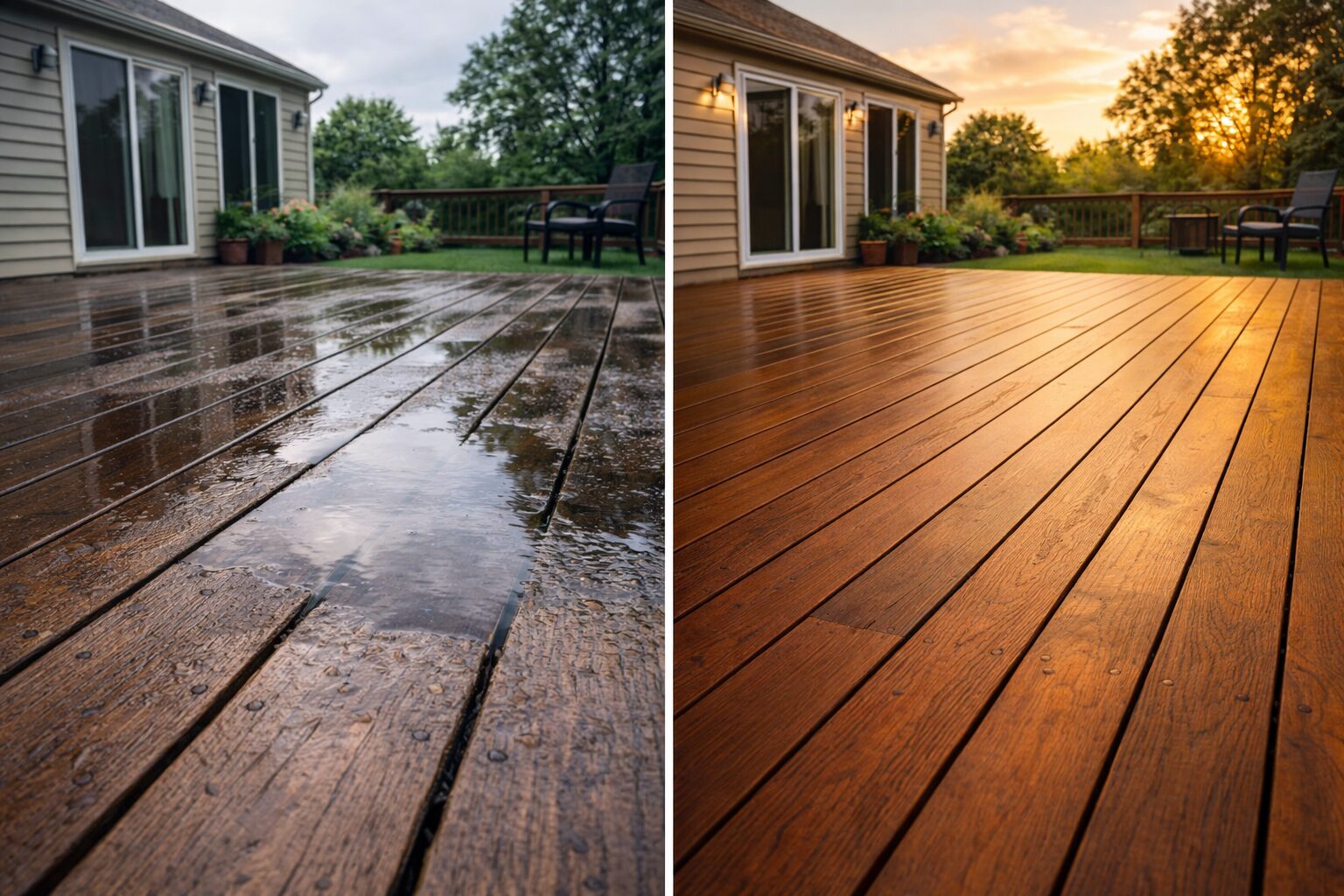
Common Deck Drainage Problems and How Water Damage Starts Over Time
The deck connects your home to the outdoors, creating a pleasant area for relaxation. However, it can also cause headaches for homeowners.
Deck drainage problems are quite common. They’re more than just cosmetic damage. Any issues should be solved on time before they become expensive to repair.
Our guide explains the common deck drainage problems and their solutions. With our professional insights, you can identify issues early and keep the deck in perfect condition.
Poor Deck Slope
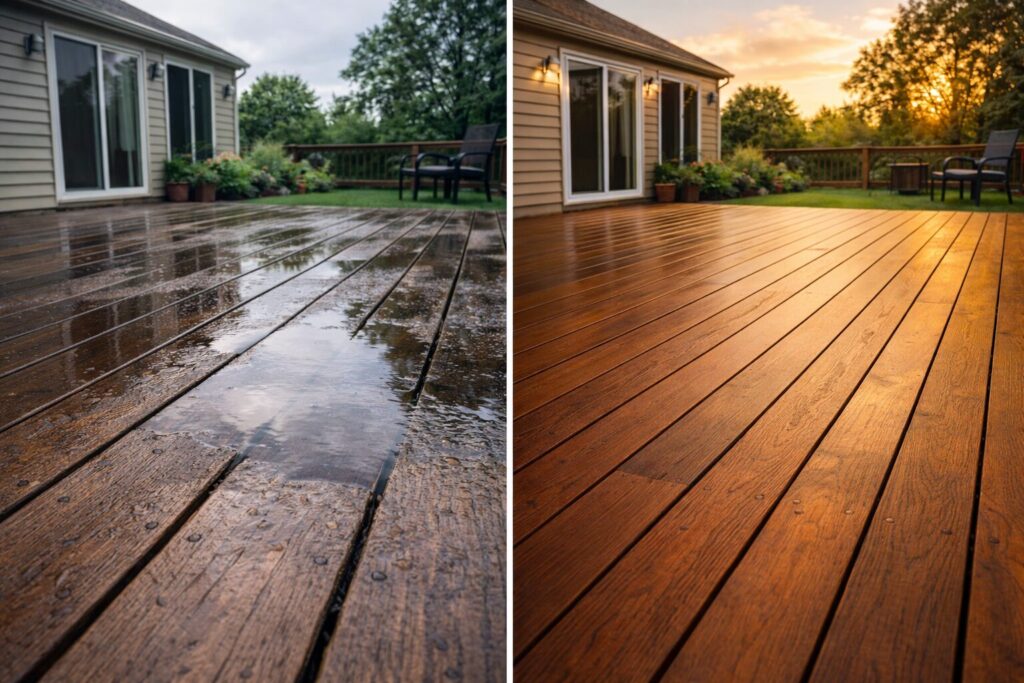
No deck is perfectly flat. It needs a slight slope so the water can drain. The slope is about ⅛ to ¼ inch per foot, directing water away from the house.
When there’s no proper slope, the water pools in the low spots. As a result, the fasteners loosen, stains appear, and mold growth occurs underneath.
Make sure to check the slope when resurfacing or rebuilding. Measure with a 4-foot level and a tape measure. Keep in mind that fixing the slope after installation costs more.
Blocked Gaps Between Deck Boards
The deck boards have about ⅛ to ¼ inch spacing between them. It is part of the deck drainage system, allowing water to pass through. Over time, dirt and debris can clog the gaps.
Because of this, water sits on top of the boards and can cause deck rot from moisture.
However, problems can also occur with composite decks that are waterproof. The water that sits between boards and joists can damage the framing.
Ultimately, regular cleaning is the solution to this problem. Use a deck cleaning tool or a putty knife to clean the gaps.
Flashing Problems
Flashing is a waterproof material installed to direct water away from the ledger board. If it is installed incorrectly, the water seeps into the home’s structure.
Some of the signs you can notice are soft siding, stains on interior walls, and separation between the deck and the house.
Poor Under-deck Drainage
Elevated decks are a popular choice. Many homeowners want to have a dry storage space or a patio underneath. While this helps use the space efficiently, there is one thing to keep in mind.
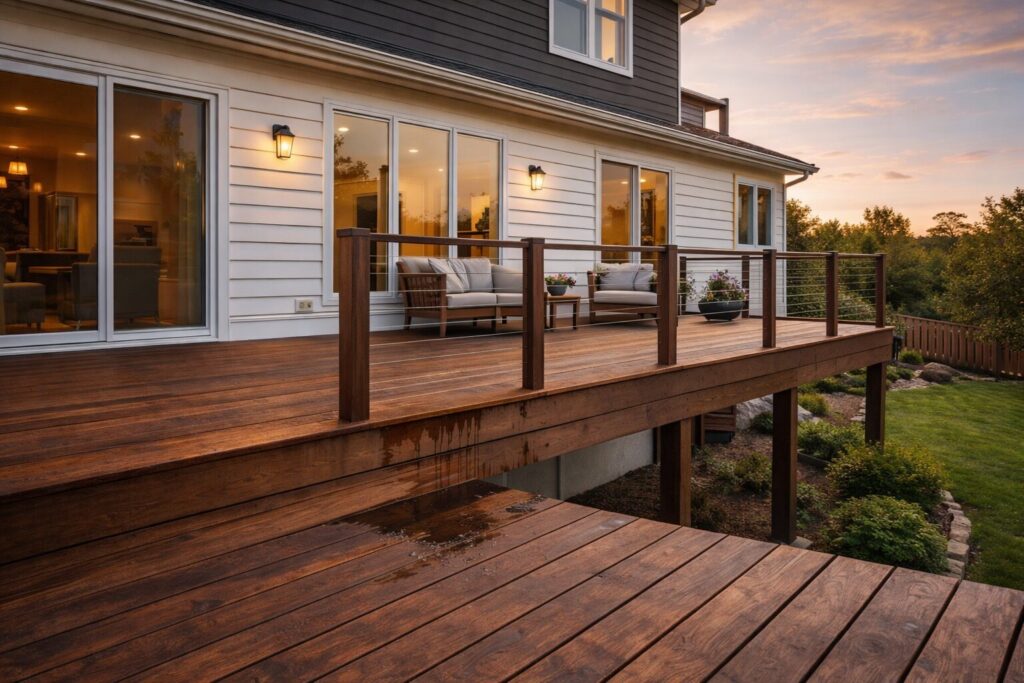
Elevated decks should have proper deck drainage solutions. This directs the water into gutters, preventing pooling. Problems happen due to blocked gutters, sagging panels, or poor slope.
For instance, homeowners often do a DIY drainage system. But with heavy rainfall, the amount of water is more than the system can handle. This results in spilling, soaking the area below the deck.
The solution is to go for a professionally designed drainage system. Do an inspection once a year to check for separation.
Improper Waterproof Coating
Applying sealer is one of the regular maintenance tasks for preventing deck water damage. Remember that these help slow water penetration.
Not applying a sealer or failing to do it correctly results in moisture problems. One of the common mistakes homeowners make is applying the sealer on a dirty surface. Make sure it is clean and fully dry before proceeding.
Also, follow the application schedule recommended by the manufacturer. This helps maintain a protective barrier.
Lastly, make sure to use outdoor-grade products. Indoor-rated sealers are not designed to withstand moisture and UV rays, leading to damage.
Low Clearance
By rule, the deck should be built at least 18 inches above the soil. This provides proper airflow for drying out. In low-profile decks, there is no ventilation, and water will stay.
The lack of clearance prevents moisture from evaporating after rainfall. This causes the joints to rot, resulting in structural damage.
Sagging Joists
This is one of the common deck drainage problems in older structures. The sagging joists cause the boards to sink, creating low points where water puddles. You’ll notice dips when walking and water pooling on deck.
Actually, this is more than just cosmetic damage. Reinforce the joists or add additional support beams to prevent structural damage.
Deck Drainage Problems: When To Call a Professional
Some deck drainage problems are due to maintenance and can be DIY projects. But the structural problems require professional help.
Ledger Board Issues
Any separation between the ledger board and the house is a serious issue. Stop using the deck and get it inspected by a professional.
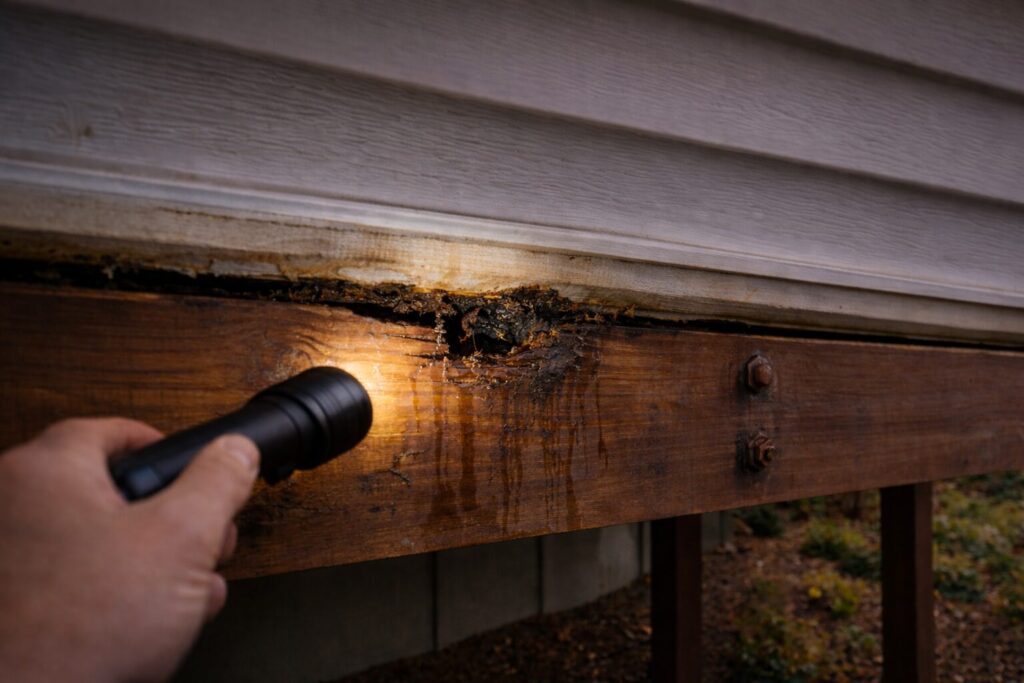
The problem here is that the ledger board carries a large portion of the weight of the deck. When exposed to water due to improperly installed flashing, the wood can rot. This compromises the structural integrity of the deck.
The contractor will inspect the damage and do structural work. They often remove sections of the decking, reinstall flashing, and replace rotted wood.
Some of the signs that they look for are gaps between the deck and siding, interior wall stains, and rusted lag bolts.
Sagging or Movement
The structural sagging requires a professional repair. Homeowners shouldn’t try to DIY it, since patching the sagged areas without addressing load distribution can worsen the problem.
The contractors check the joists and identify the problem with them. They inspect footings to see if they shifted due to soil movement or poor drainage.
Lastly, professionals determine if reinforcement or partial rebuild is the right solution.
Complex Deck Drainage Problems
Many homeowners ignore poor deck drainage issues. If you have drainage system issues under the deck, this is part of the inspection too. They look for problems like overflow during heavy rainfall, leaks at the seams, sagging panels, and mold.
More importantly, homeowners shouldn’t do DIY repairs. Simple patching won’t solve the underlying drainage issues.
Your contractor inspects the deck to determine if the problem happens due to:
- Incorrect slope
- Insufficient gutter capacity
- Poor installation
- Material failure
What to Expect During a Professional Inspection
Problem History
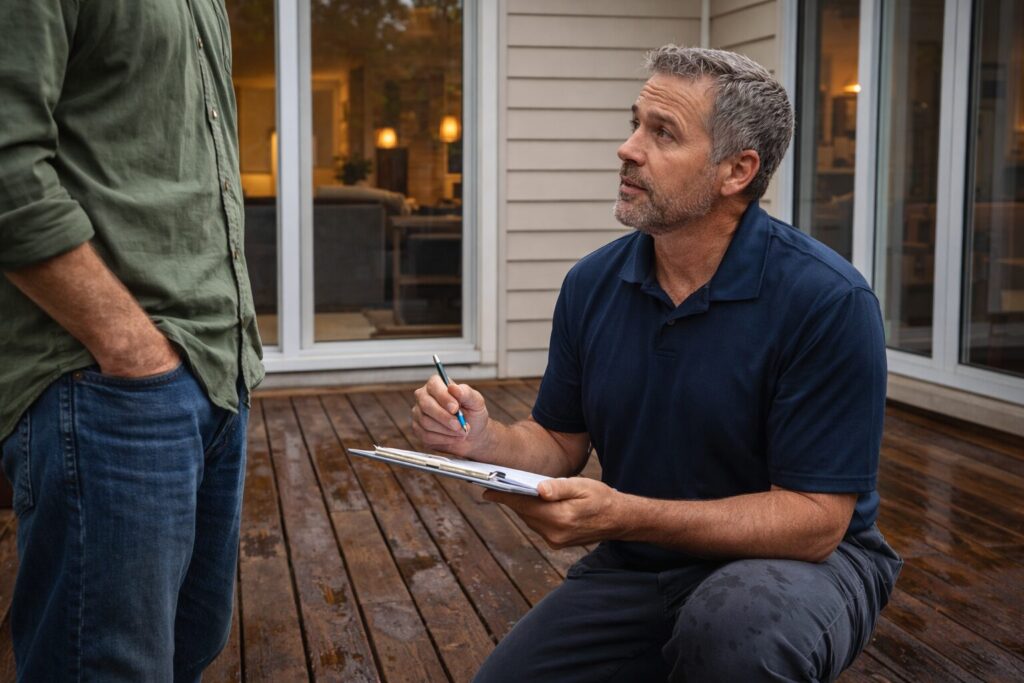
A professional contractor will ask questions to understand the issue. These are some of the common questions:
- When did you first notice the issue?
- Does it happen during heavy rain only, or light rain too?
- Is the problem seasonal?
- Has any repair work been done before?
Surface Evaluation
The contractor checks the entire deck for low spots, soft boards, or cracks near fasteners. They use a level to check the slope.
Moisture Testing
The contractors use a moisture meter to measure the water content of the wood components. This helps distinguish between moisture from recent rain or saturated wood from poor drainage.
Ledger and Flashing
The professionals check for separation between the house and the ledger. This area carries the structural load, and any damage is serious.
They check for:
- Rot in the rim joist
- Dark staining on the sheathing
- Deck water damage signs
Structural Review
The contractors check for moisture damage under deck if accessible. This allows professionals to spot problems that aren’t visible from above.
Results
After a thorough inspection, the contractor presents you with the findings. They should explain what causes the problem, how severe the damage is, and how to fix it. They can even make suggestions for adjusting your maintenance routine.
Final Take
Any deck water damage signs should be taken seriously. Schedule an inspection with your contractor to find out more about the underlying problem. On the other hand, stick with your regular maintenance schedule to prevent water issues in the future.
Your deck is an investment, and maintaining it regularly helps it stay in excellent shape. If you experience any issues, contact us now and schedule your inspection.