

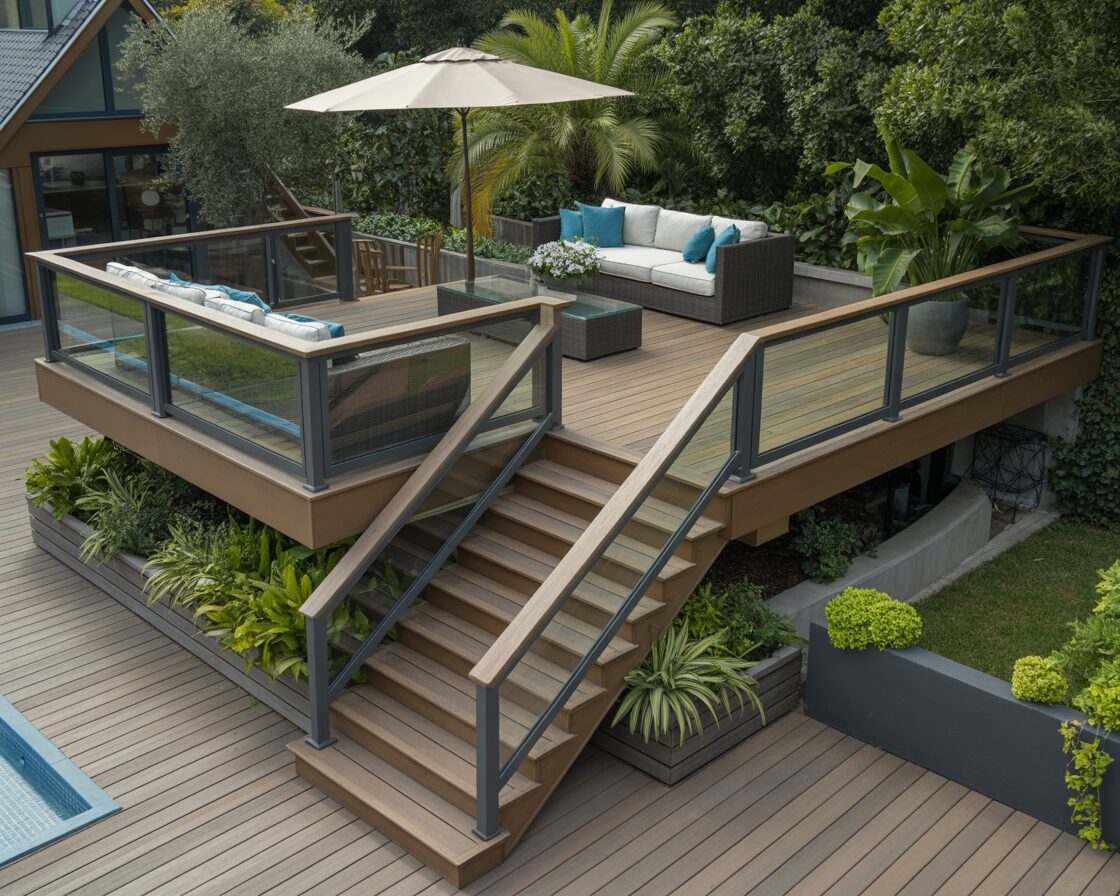
Deck Planning Guide: Choosing the Right Size, Layout, and Materials for Your Home
A deck is ideal for homeowners who want to make the most of their outdoor space. Some want to catch the morning sun and enjoy a cup of coffee. Others love al fresco dining with family and friends.
A good deck starts with more than just picking the board color. From planning the size, layout, and materials to obtaining permits, it is a lengthy process that is well worth the result.
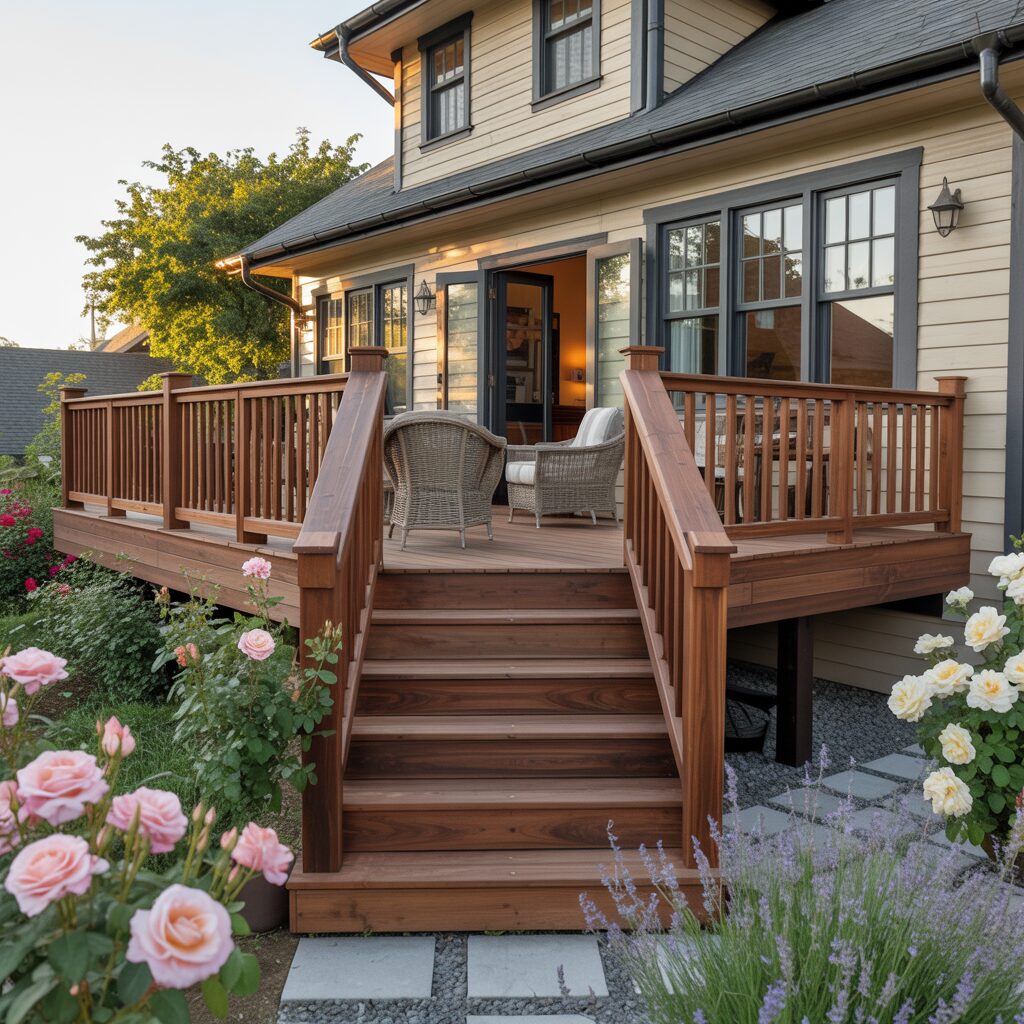
Our guide addresses any questions, helping you plan a space that is functional and usable.
Deck Planning Guide: Choosing the Right Size
Understand the Purpose
The deck adds usable square footage to your home. Before measuring, you need to determine the purpose. Some people want a private retreat, while others prefer a large entertainment area.
These are some of the options:
- Outdoor dining for 4-8 people
- Entertaining large groups
- Lounging with sectional seating
- Grilling and cooking
- Pool access
- A quiet retreat
A 12′ x 12′ deck might be good for a lounge area. But if you place a dining table for six and a grill, there won’t be enough space for moving the chairs.
Professional tip: Dining tables for 4-6 people need a minimum of 12′ x 14′ for traffic flow.
Mind the Proportion
A deck isn’t only a relaxing area. Instead, it is also considered part of the curb appeal. So you want it to feel proportionate and balanced.
Mind you, a deck that’s too small looks like an awkward addition. And one that’s too big overwhelms the yard. Designers suggest that the deck shouldn’t exceed 20% of the home’s square footage.
Deck Sizes
The common deck dimensions are:
- Small: 10’x10′ to 12’x16′
- Medium: 12’x16′ to 14’x20′
- Large: 20’x20′ or large
Homeowners should consider how the size fits their needs. We’ll explain more about the deck sizes next.
Deck Size Guide
Compact (8′ x 10′)
A compact landing deck is about 80 sq ft. It provides just enough space for a bistro table for two and a grill platform. It is ideal for townhomes or ones with limited yard space.
However, keep in mind this isn’t a space for hosting. Instead, it can be a private retreat.
Small Deck (10’x10′ to 12’x16′)
With 120 sq ft, this space works as a basic dining deck. It allows for a simple seating arrangement, which is ideal for small families. It is enough to fit:
- 4-person dining set
- Grill on one side
- Small planter or storage bench
However, keep in mind that the walkways will be limited. And you can’t fit additional lounge seating.
Medium (12’x16′ to 14’x20′)
A medium deck provides a comfortable dining area and separate seating. It is the ideal size for small to medium-sized gatherings.
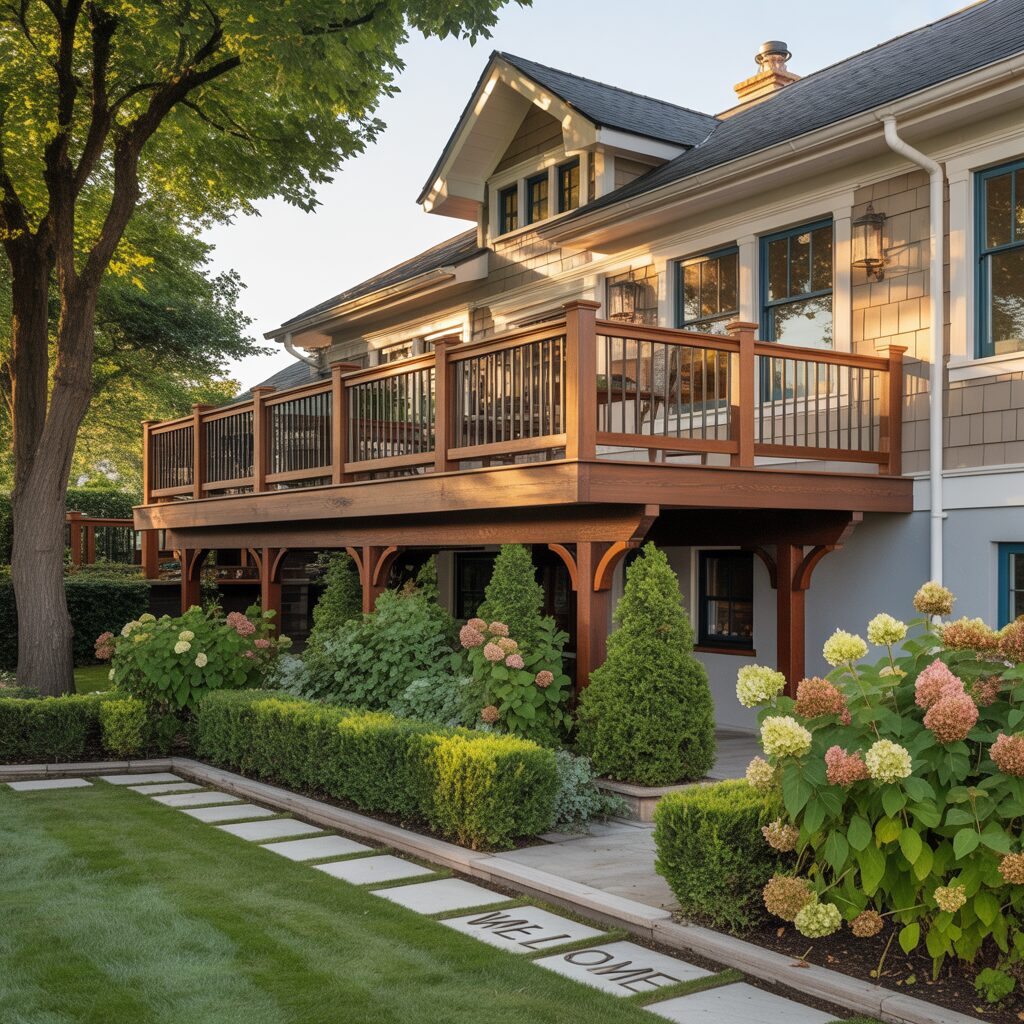
You can comfortably fit a 4-6 person dining table, grill, and small seating area. Plus, there is enough space for moving around the furniture without bumping into it. It connects the indoors to the outdoors, creating an additional living area.
For 14′ x 18′ decks, you can expect to have defined zones. With separate dining and lounge areas, you have the perfect outdoor entertainment space.
Large (20’x20′ or larger)
When the size exceeds 16′ x 20′, you have a full outdoor living space. It supports different functional areas while maintaining an uninterrupted traffic flow. This setting is ideal for large gatherings and families that spend a lot of time outdoors.
A large deck comfortably fits an 8-person dining table, sectional seating, grill, and prep counter. Ensure your yard is large enough to support this size.
With 20’x20′ you can even fit an outdoor kitchen and firepit.
Choosing Deck Materials
Pressure-Treated Wood
Pressure-treated wood is the most affordable option. It is sturdy and easily available, making it ideal for DIY projects.
However, homeowners should do regular maintenance. The pressure-treated wood requires staining or sealing every 1-3 years. Plus, it cracks and is prone to splinters.
Cedar or Redwood
Cedar is a common decking material. Homeowners love the natural appearance. Yet it feels softer underfoot. And the best advantage is that this type of wood is naturally resistant to rotting.
On the other hand, cedar comes with its cons. One of them is the higher cost when compared to treated wood. Hence, it may not be ideal for the decking projects on a lower budget. And let’s not forget it requires frequent sealing.
Composite Decking
Composite decking is a blend made of wood fibers and recycled plastics. It pairs the beauty of wood and the durability of modern materials. In fact, manufacturers give 10- to 25-year warranties.
The material is resistant to fading, staining, and insect infestations. Also, it is splinter-free, so you can walk barefoot.

However, the initial cost is higher compared to other options. And if your deck is exposed to direct sunlight, pick light colors, as it can become too hot to walk barefoot.
PVC Decking
PVC decking is a synthetic material. This makes it moisture-resistant and extremely durable, so it is a common choice for pools or humid climates. Being low maintenance, it doesn’t require sanding and sealing.
But still, PVC decking comes with its own disadvantages. The higher cost, heat retention, and limited design options may deter homeowners.
Deck Layout Ideas for Backyard
Multi-Level Deck
Custom deck layout planning allows you to create a space that truly reflects your needs. A multi-level deck is ideal for sloped yards or when you need to separate the space into zones.
The upper level is used for dining and cooking, while the lower level is ideal for lounging. This type of deck layout follows the natural slope of the yard, working with it to create separate zones.
Wraparound Deck
A wraparound deck extends along the two sides of the home. It is ideal for a home with multiple access points, creating a seamless transition to the outdoors.
It is ideal if you want to increase the usable space but don’t want to go too far in the yard. On the other hand, it creates separate zones.
Floating Deck
A floating deck sits low to the ground, making it feel connected to the yard. It is detached or minimally connected to the house, feeling modern and clean. Plus, it doesn’t require tall support posts.
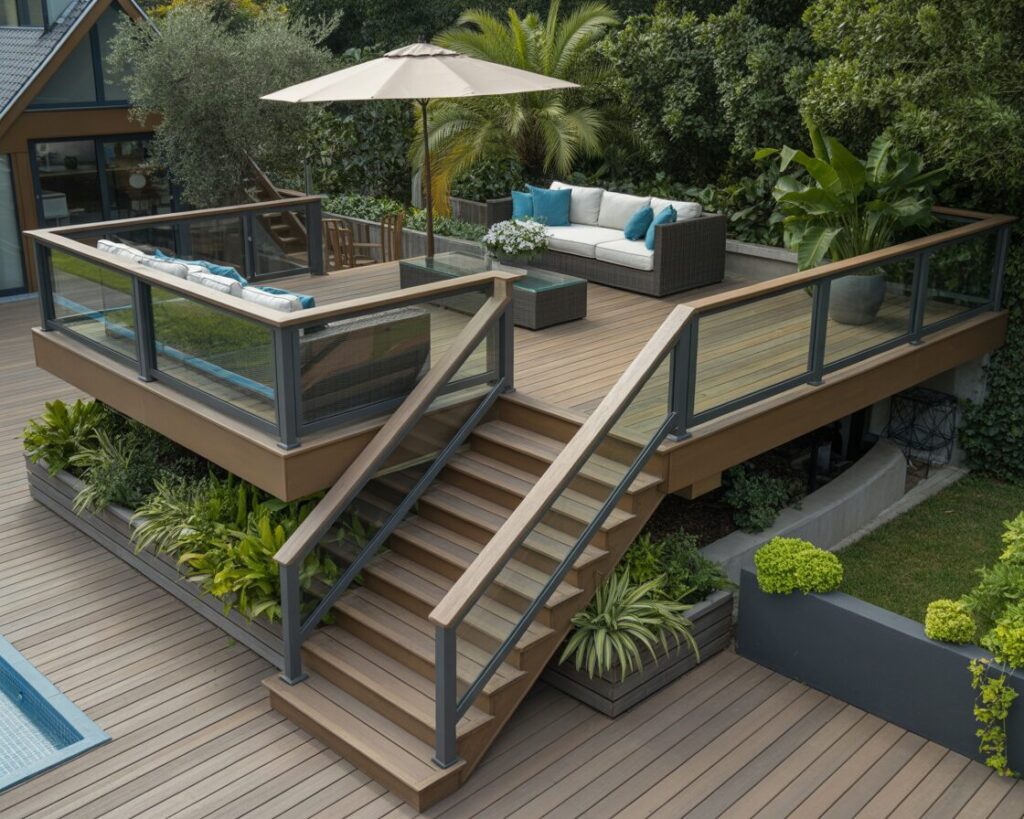
Corner Deck
The corner deck features a compact design, extending from one section of the house. You have a functional space while still enjoying the yard.
Tree-Encompassing Deck
The tree-wrap deck is one of the backyard deck design ideas that embraces nature. You don’t have to cut that beautiful tree down. Instead, the deck layout is built around it. The result is a serene and shaded outdoor living area.
Final Take
The deck is not only a wooden construction, but also your outdoor living space. Our deck design planning tips help you understand size, layout, and materials. The goal is to balance intention with functionality and adjust the space to your needs.
Like every other home update, you need a trusted contractor who will take it from start to finish. Reach out today to discuss your project!