

During a roof inspection, most homeowners focus on the shingles, gutters, or leaks. Roof ventilation isn’t usually on the checklist. Unless there is a visible problem, it rarely gets attention.
But this is one of the biggest mistakes. Attic ventilation issues can affect the roof structure, insulation, and indoor comfort.
This article goes through the common roof ventilation problems and the early signs. You’ll understand how they affect the roof’s performance and why solving them is important.
Blocked Soffit Vents
Soffit vents help with air circulation. They bring in the cool air and push out the stale air. It helps regulate temperature to prevent ice dams and mold.
When the soffit vents are blocked, they no longer serve their function. This can happen when the insulation moves and blocks them. Or, painters have covered them with paint. And in most cases, debris can clog the openings.
These are the poor roof ventilation signs:
- Uneven roof temperatures in winter
- Ice buildup along the eaves
- Higher cooling bills in summer
- Insulation pressed tightly against the roof decking.
For instance, a homeowner had a problem with ice dams. They thought it was the gutters that caused the problem. But after inspection, they found out that the insulation covered the openings. The blocked vents couldn’t release the heat. It built up in the attic and melted the snow unevenly. Then, the water froze at the edges, causing ice dams.
During the summer, this results in overheating. Plus, it retains moisture in the winter, leading to shingle damage and rotting wooden components.
Insufficient Exhaust Venting
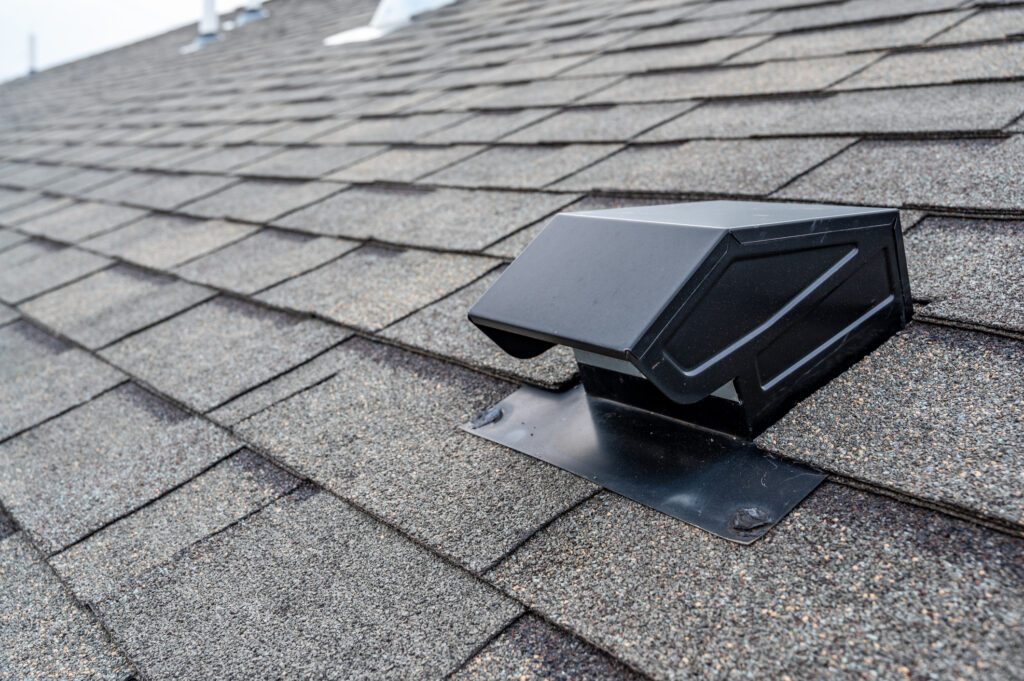
The roof needs airflow to release heat and moisture. The ridge vents, box vents, or turbine vents release hot air. However, sometimes there might not be enough vents, or they are poorly installed.
The stagnant air can result in:
- Extremely hot attic in summer
- Curling shingles even though the roof isn’t old.
- HVAC running constantly to compensate the heat
- Roof decking warping
For example, a roof in a hot climate needed replacement after only 12 years. The manufacturer states a lifespan of 25 years.
The roof inspection showed poor exhaust ventilation. As a result, the attic temperature exceeded 140 degrees F. With time, this weakened the structural integrity of the shingles.
An extremely hot attic can shorten the lifespan of the shingles. Plus, heat weakens the seals, increasing the risk of wind damage.
Imbalanced Intake and Exhaust
Ventilation systems require balanced intake and exhaust. When there is more exhaust than intake, this leads to negative pressure. On the other hand, too much intake with less exhaust leads to trapped air.
Some of the common signs of imbalanced intake and exhaust are:
- A whistling sound during the wind
- Cold spots in winter
- Moisture at the corners
No Ventilation
No ventilation is a common problem in older houses. These roofs are tightly sealed with minimal airflow.
These are the signs your roof isn’t ventilated properly:
- Musty smell
- Mold
- Darkened roof sheathing
- Ice dams
During a routine inspection, a homeowner found black staining on the sheathing. They couldn’t find a leak anywhere.
It turned out that the problem was no ventilation. The moisture was trapped in the attic, creating ideal conditions for mold development.
If left unaddressed, this leads to heat and moisture damage in attic. Moisture damages the wood structure, while mold creates poor air quality.
Improperly Installed Ridge Vents
The ridge vents need to be properly installed by a professional. They should be cut correctly along the peak of the roof and have spacing. Otherwise, any errors can block the airflow.
Some signs of improperly installed ridge vents are:
- Overheated attic
- Snow melting unevenly at the peak.
For example, a homeowner wanted their roof to be replaced. The service included ridge vent installation. However, the contractor didn’t cut the roof decking properly. With this, the vent did not function properly.
Over time, this problem leads to roof moisture buildup in attic and heat retention.
Mixing Different Vent Types Incorrectly
Using different vent types incorrectly is one of the common ventilation problems in roofing systems. Combining them improperly makes the air exit through the nearest opening, without going through the entire attic.
For example, a home has ridge vents and gable vents. The air enters and exits through the gable vents. The air in the lower attic areas remains stagnant. Over time, this results in uneven aging of materials.
Some signs you can notice are:
- Shingle damage in specific areas
- Some sections are dry and others are damp
- Inconsistency in attic temperature
Relying Only on Gable Vents
Gable vents alone won’t do the job properly. They need to be supported by soffit vents for natural convection. Otherwise, the vents rely on find to function.
Common signs:
- Ventilation works only during breezy days
- Air is warmer near the wood deck
Poor airflow results in inconsistent temperatures, which puts stress on the roofing materials.
Insulation Blocking Vents
Homeowners often add insulation to improve energy efficiency. However, they may cover the pathways between rafters by mistake. During the winter, condensation can develop. It may drop onto insulation, reducing its effectiveness. In addition, the framing can rot due to moisture exposure.

Signs that you need attic airflow improvement:
- Damp insulation
- Frost buildup in winter
- Condensation on nails protruding from the roof decking
Bathroom and Kitchen Vents Terminating in the Attic
In some houses, exhaust fans discharge into the attic. During the winter, homeowners can notice dampness when there is no roof leak. This happens because the bathroom steam condenses in the attic. Hence, constant exposure to moisture shortens the roof’s lifespan.
The telltale signs are:
- Rust on metal components
- Mold
- Attic humidity
Clogged Roof Vents
Roof vents can get clogged by bird nests, leaves, insect infestations, or storm damage. This problem is often missed because it is located on the roof and not inside.
Even though there is no immediate leak, the problem can grow over time. The heat is trapped inside the attic, and materials degrade faster.
Overventilation
More isn’t better when it comes to vents. Overventilation disrupts the airflow patterns, resulting in energy inefficiency. Homes will have increased energy bills during the winter and drafty upper floors.
Final Take
Roof ventilation affects more than indoor comfort. Any minor issues can create costly damage or shorten the roof’s lifespan.
In fact, roof ventilation problems are less visible to homeowners. But over time, they result in higher utility bills, mold, or shingle damage.
That’s why homeowners should do frequent checks to ensure the roof is in great condition. In many cases, roof ventilation repair may be needed to prevent future issues. Don’t postpone your regular maintenance and schedule a roof inspection now.